An installation built around a twisted gaze structure in which “I, who is stalking someone,” was in turn being stalked by another.
Related work :
short animation 'The Stalker, Extreme propose,2016'
(Full artist statement available at the end of the page.)
‘누군가를 스토킹하는 나’를, 다시 ‘다른 누군가가 스토킹하고 있다’는 뒤틀린 시선 구조를 중심으로 구성된 설치 작업
(자세한 작가 노트는 페이지 하단에 있습니다.)
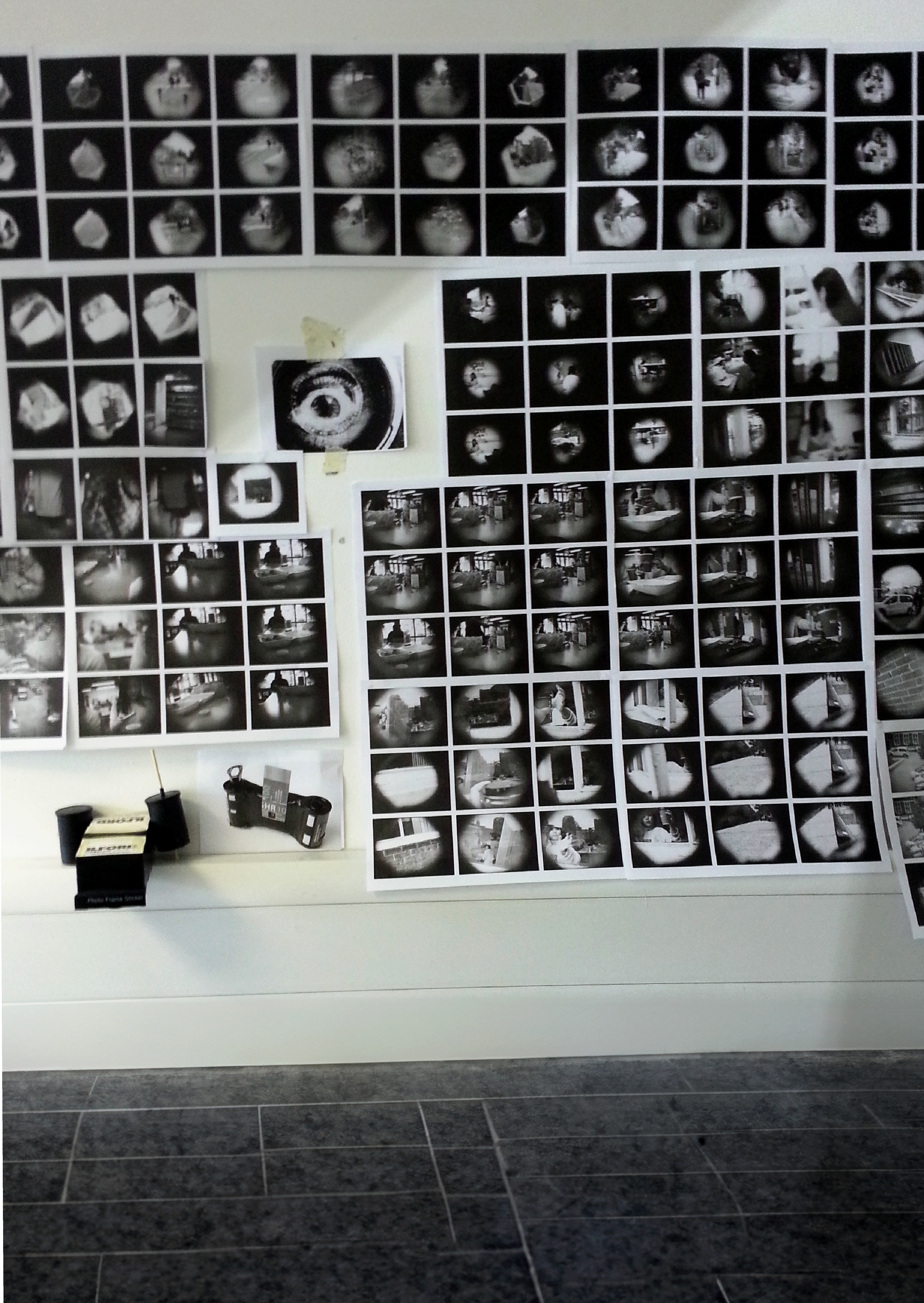
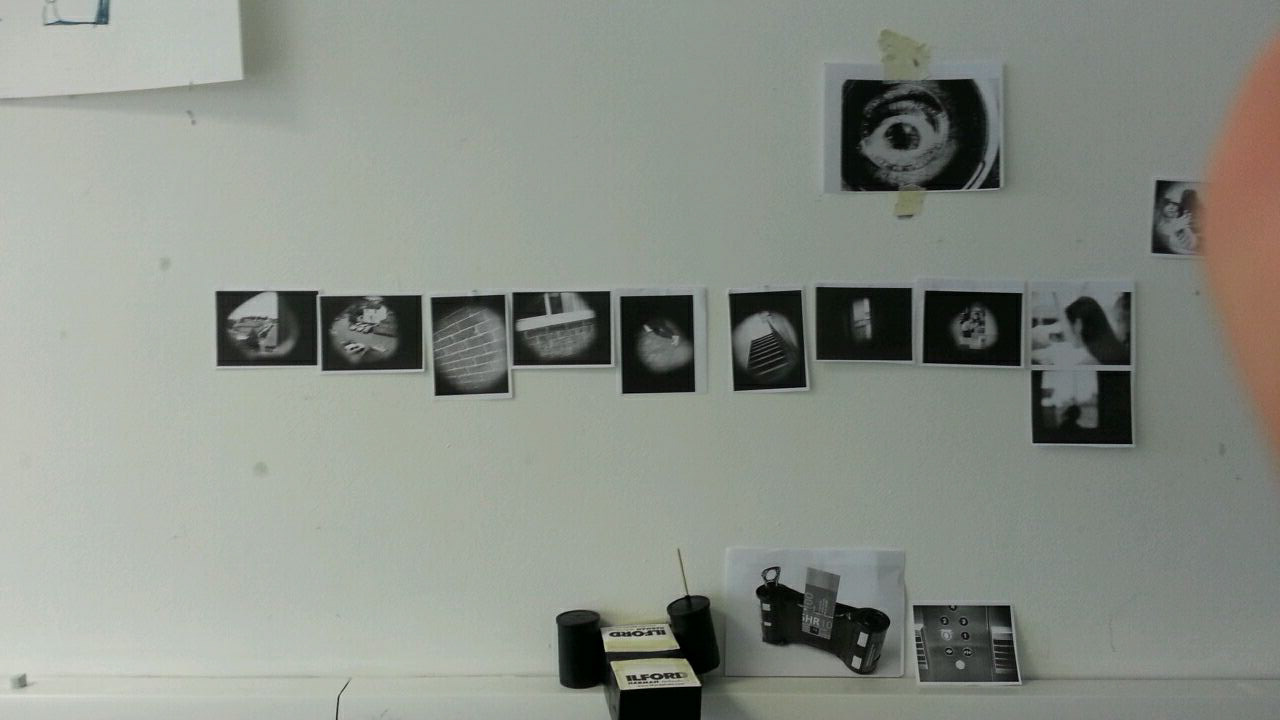
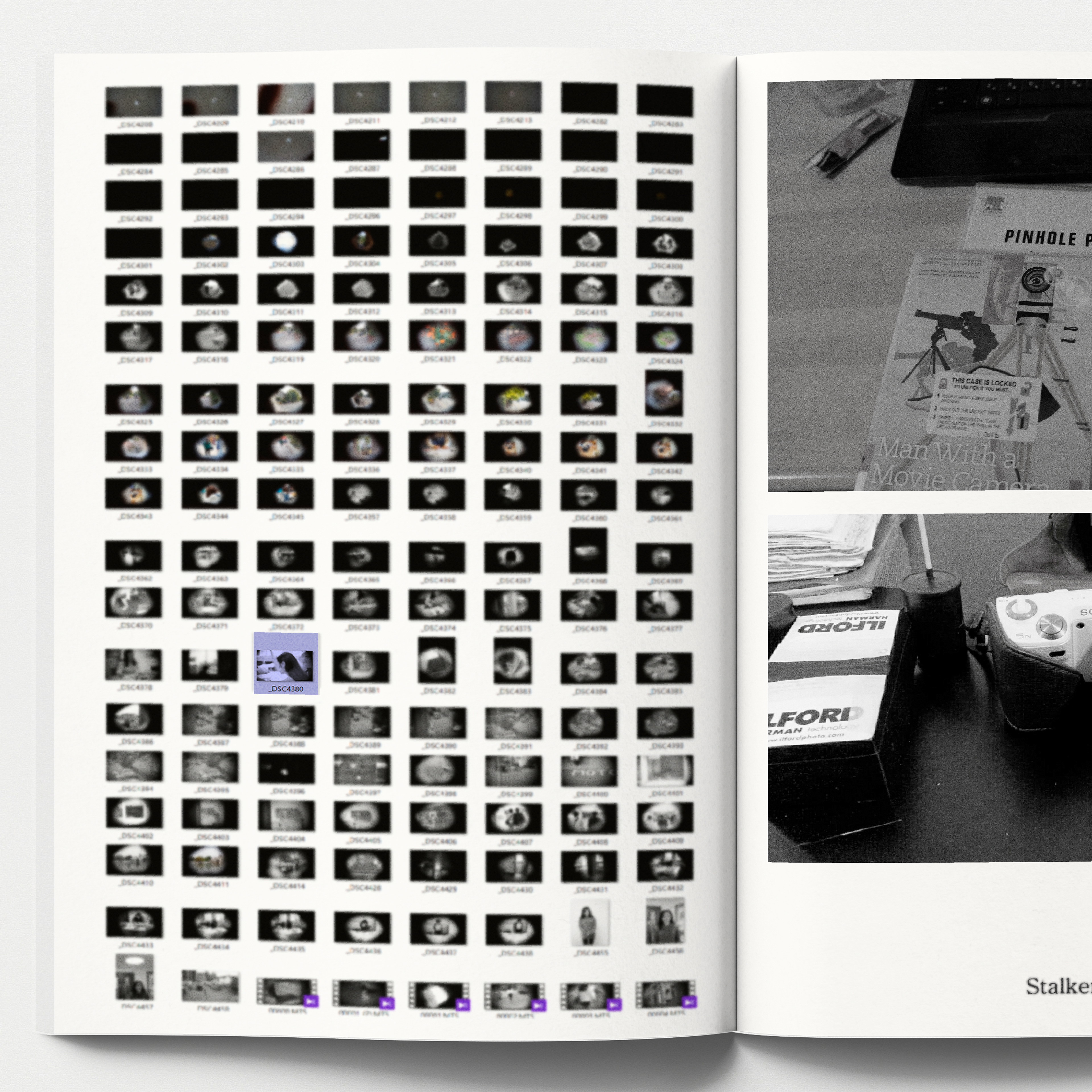
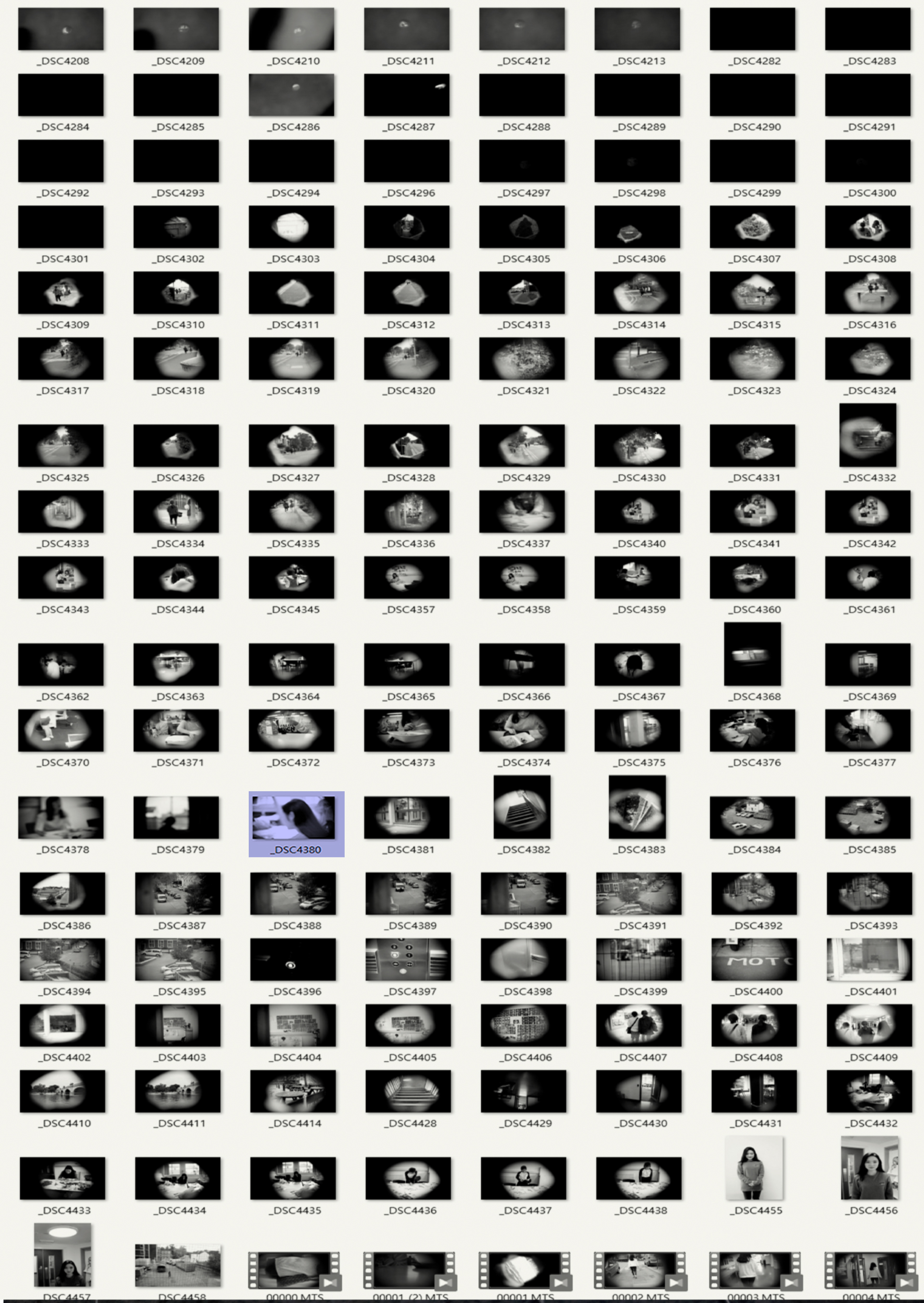
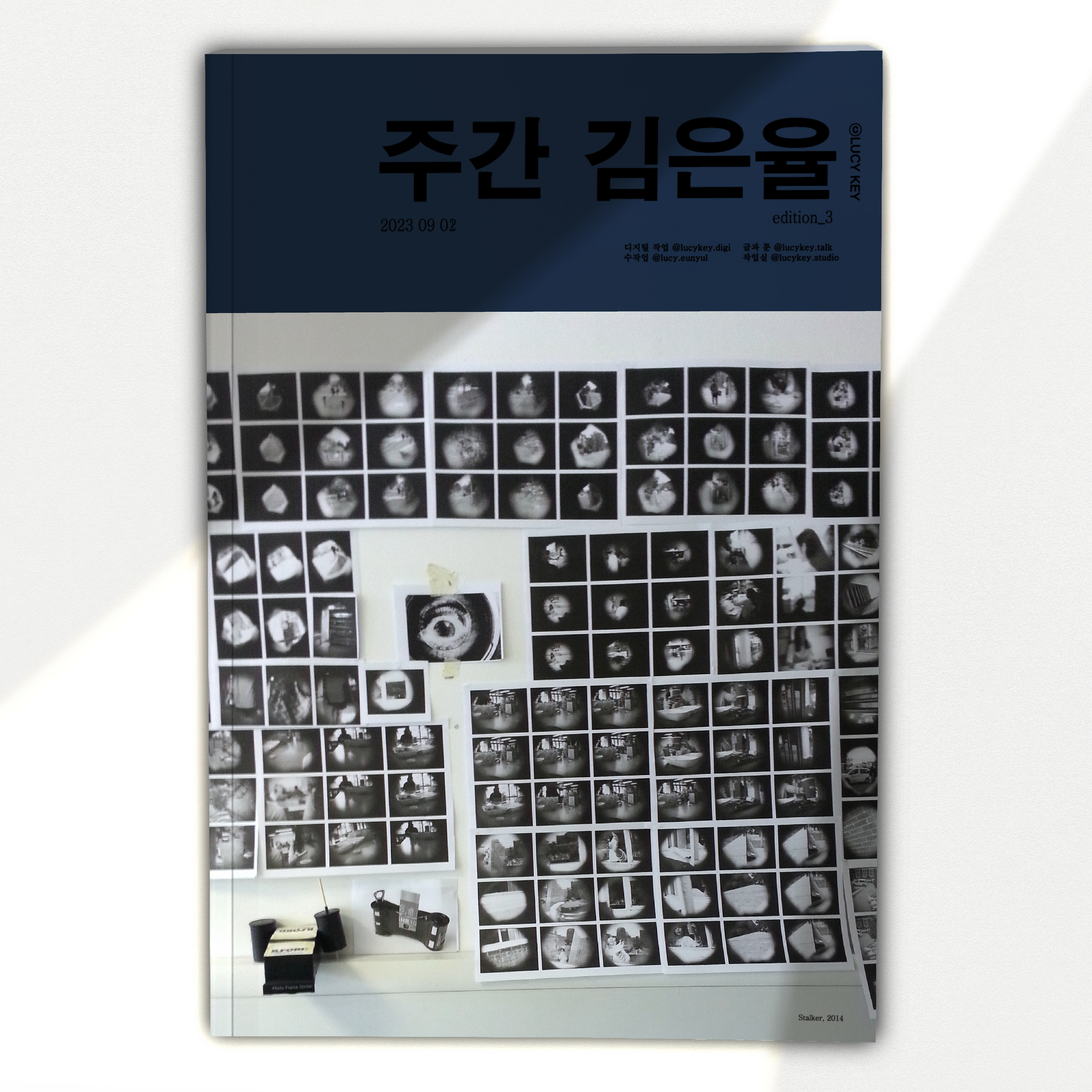
“Stalker” is an installation built around a twisted gaze structure in which “I, who is stalking someone,” was in turn being stalked by another. When the sequence of the work is reversed, the roles of observer and observed flip entirely, forming a narrative about surveillance, obsession, and the inversion of power—where the gaze itself becomes the true subject. Even the direction of the camera’s viewpoint shifts as it progresses.
All photographs and videos were produced with full consent from the model, and for ethical reasons the captured scenes depict only ordinary daily activities—walking, eating, attending class—never inappropriate or invasive moments.
Instead, the sense of a distorted gaze was created through analog methods: building a pinhole camera, masking parts of a digital lens with tape, and employing vanishing effects that limit visibility. These devices articulate the skewed yet intense subjectivity of a stalker.
Instead, the sense of a distorted gaze was created through analog methods: building a pinhole camera, masking parts of a digital lens with tape, and employing vanishing effects that limit visibility. These devices articulate the skewed yet intense subjectivity of a stalker.
In this work, “I” never appear as a character; I exist solely as the camera’s gaze. This structural choice was inspired by Dziga Vertov’s experimental film Man with a Movie Camera. While not directly connected to the film’s narrative, the early image of an eye reflected in a camera lens—and Vertov’s philosophy of the “mechanical eye,” more precise and truthful than human vision—informed the idea that the camera itself could become the narrative subject. As an homage, an image of an eye inside a camera lens is installed at the center of the work.
The English title was intentionally chosen as “Stalker,” not “The Stalker.”
This is not the story of one specific person or individualized character, but of stalking as an act, a structure, and a mechanism of surveillance and gaze. In this framework, the narrator exists only as vision.
This is not the story of one specific person or individualized character, but of stalking as an act, a structure, and a mechanism of surveillance and gaze. In this framework, the narrator exists only as vision.
The project later expanded into short video and animation. Yet even though every shot consisted solely of ordinary daily life, the weight of the theme—stalking itself—brought strong internal discomfort and ethical tension, especially for someone like me who tends to immerse deeply and pursue perfection in the process.
As a result, I chose to publicly release only a limited archive: selected photographs, a performance record, and a single animation clip. All other documentation, including full videos and animations, remains private.
As a result, I chose to publicly release only a limited archive: selected photographs, a performance record, and a single animation clip. All other documentation, including full videos and animations, remains private.
Ultimately, the decision to limit what is shown has become my statement as an artist at this moment—my position within the tension between gaze, power, and ethics. Setting boundaries on disclosure is not just a choice but the final layer of completion for a project that deals with the act of stalking.
〈스토커〉은 ‘누군가를 스토킹하는 나’를, 다시 ‘다른 누군가가 스토킹하고 있다’는 뒤틀린 시선 구조를 중심으로 구성된 설치 작업이다.
작업물의 순서를 뒤집으면 관찰하는 자와 피관찰자의 역할이 뒤바뀌도록 짜여진 이 작업은, 감시, 집착, 권력의 역전을 주제로 하고 있으며, 시선이 곧 주체가 되는 구조로 서술된다.
촬영한 사람의 시선의 방향 역시, 극의 진행에 따라 변화한다.
작업물의 순서를 뒤집으면 관찰하는 자와 피관찰자의 역할이 뒤바뀌도록 짜여진 이 작업은, 감시, 집착, 권력의 역전을 주제로 하고 있으며, 시선이 곧 주체가 되는 구조로 서술된다.
촬영한 사람의 시선의 방향 역시, 극의 진행에 따라 변화한다.
모든 사진과 영상은 사진의 모델과의 협의 아래 제작되었고, 윤리적인 이유로, 촬영된 장면들은 길을 걷거나 식사하거나 수업을 듣는 등의 일상적인 장면들로만 구성되어 있다.
대신, 촬영 방식을 핀홀카메라를 제작하거나, 디지털 카메라의 렌즈 일부를 마스킹 테이프로 가리는 등, 아날로그적으로 주어지는 바니싱 효과와 의도적으로 시야를 제한하는 방식으로 왜곡된 시선을 표현했다. 이는 스토커의 비정상적이지만 강렬한 주관을 시각적으로 구현하기 위한 장치다.
대신, 촬영 방식을 핀홀카메라를 제작하거나, 디지털 카메라의 렌즈 일부를 마스킹 테이프로 가리는 등, 아날로그적으로 주어지는 바니싱 효과와 의도적으로 시야를 제한하는 방식으로 왜곡된 시선을 표현했다. 이는 스토커의 비정상적이지만 강렬한 주관을 시각적으로 구현하기 위한 장치다.
이 작업에서 ‘나’는 인물로 등장하지 않고 카메라의 시선으로만 존재하는데, 이러한 시선 구조는 지가 베르토프(Dziga Vertov)의 실험영화 〈Man with a Movie Camera〉에서 영향을 받았다.
영화 내용과는 직접적으로 연관되진 않지만, 영화 초반부 등장하는 카메라 렌즈에 비친 눈의 이미지, 그리고 인간의 눈보다 더 정밀하고 진실에 가까운 ‘기계의 눈’을 추구한 베르토프의 철학에서 아이디어를 확장하여 ‘카메라 자체가 주체가 되는 서술 구조’는 이 작업에서 ‘화자가 존재하지 않는 이야기’로 재해석되었으며, 작품의 중앙에 이를 오마주한 카메라 렌즈 속 눈동자의 이미지를 설치했다.
영화 내용과는 직접적으로 연관되진 않지만, 영화 초반부 등장하는 카메라 렌즈에 비친 눈의 이미지, 그리고 인간의 눈보다 더 정밀하고 진실에 가까운 ‘기계의 눈’을 추구한 베르토프의 철학에서 아이디어를 확장하여 ‘카메라 자체가 주체가 되는 서술 구조’는 이 작업에서 ‘화자가 존재하지 않는 이야기’로 재해석되었으며, 작품의 중앙에 이를 오마주한 카메라 렌즈 속 눈동자의 이미지를 설치했다.
영문 제목을 “The Stalker”가 아닌 “Stalker”로 선택한 이유는 이 작업이 특정한 인물이나 인격 화된 주체의 이야기가 아니라, ‘스토킹’이라는 행위와 그 구조, 감시와 시선의 메커니즘 자체에 집중하고 있기 때문이다.
그래서 작품의 서술자는 ‘시선’으로만 존재하게 된다.
그래서 작품의 서술자는 ‘시선’으로만 존재하게 된다.
이 작업은 이후 단편 영상과 애니메이션으로 확장되었다. 하지만 모든 촬영물은 사회적으로 부적절한 장면이 아닌 일반적인 생활의 일부였음에도, 스토킹이라는 소재 자체의 무게감과 작업자로서의 강한 내적 불편함, 특히 작업 시 깊이 빠져들어 완벽함을 추구하는 경향이 있는 나에게는 더욱 더 불쾌한 감정과 윤리적 고민을 가져왔다.
이에 따라 이 프로젝트는 단순 아카이빙 목적으로 사진 일부, 퍼포먼스 기록, 애니메이션 클립 1점만을 공개하기로 결정했으며, 그 외 모든 기록과 단편 영상, 애니메이션의 전체 버전은 비공개로 유지하고 있다.
이에 따라 이 프로젝트는 단순 아카이빙 목적으로 사진 일부, 퍼포먼스 기록, 애니메이션 클립 1점만을 공개하기로 결정했으며, 그 외 모든 기록과 단편 영상, 애니메이션의 전체 버전은 비공개로 유지하고 있다.
결과적으로 〈스토커〉 프로젝트의 공개 한도를 두는 것 자체가 이 주제에 대해 고민하는 현재 시점의 작가로서의 입장(statement) 그 자체이자, 시선, 권력, 윤리 사이에서 작업자로서 느낀 긴장과 갈등의 총합이며 스토킹을 다루는 이 작업물에 대한 완성점이 되지 않나 하여 이 내용을 추가하였다.